
Cranberries grow on low, creeping vines that spread across the ground via runners, rooting as they go. Can you grow cranberries successfully at home? You can grow them successfully without a real bog, but you do need to get two things right: soil acidity and consistent moisture. They are not bushes. can you grow cranberries They are not trees. They are a slow-spreading groundcover that, in the wild, dominates acidic peat bogs alongside sphagnum moss. At home, you can grow them successfully without a real bog, but you do need to get two things right: soil acidity and consistent moisture. At home, you can grow them successfully without a real bog, but you do need to get two things right: soil acidity and consistent moisture.
Cranberries How Do They Grow: How to Plant and Care
Marcus Holloway
24 Mar 2026
Where cranberries actually grow in nature
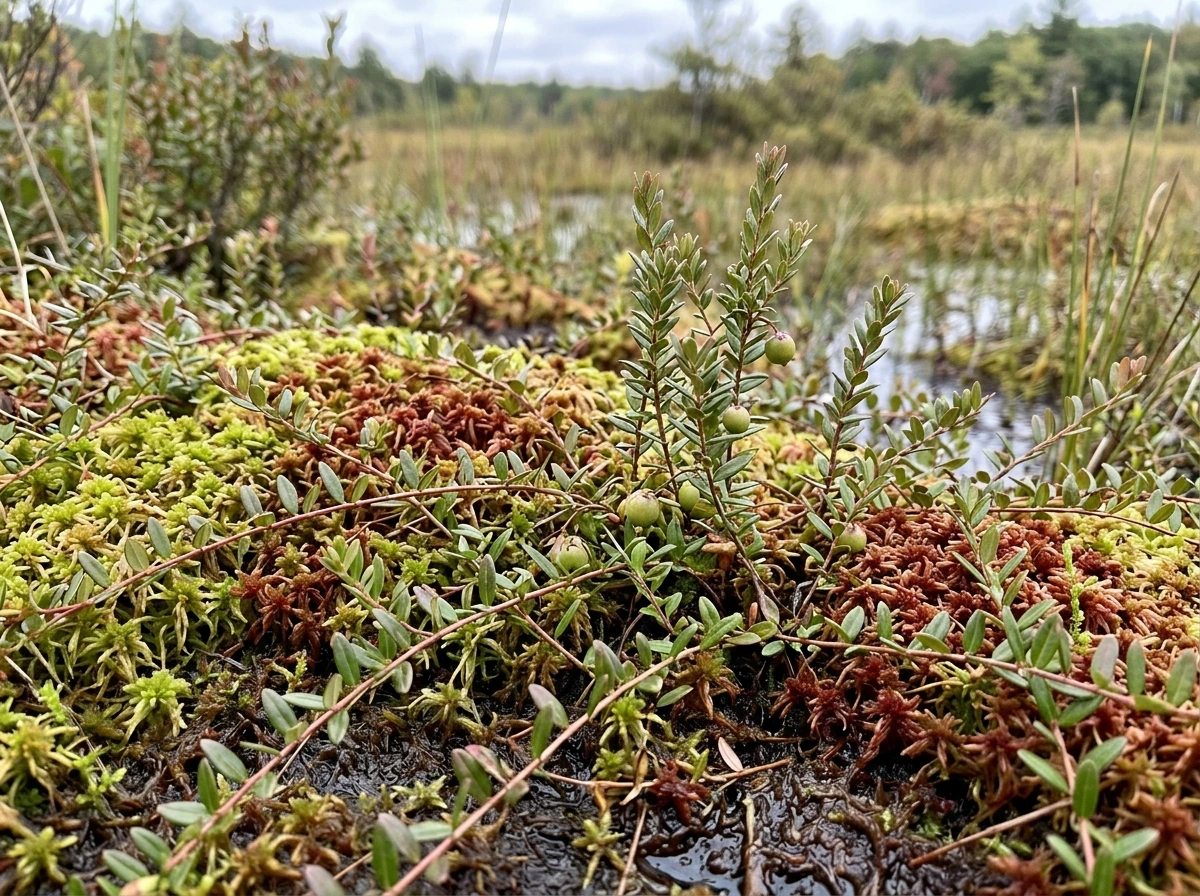
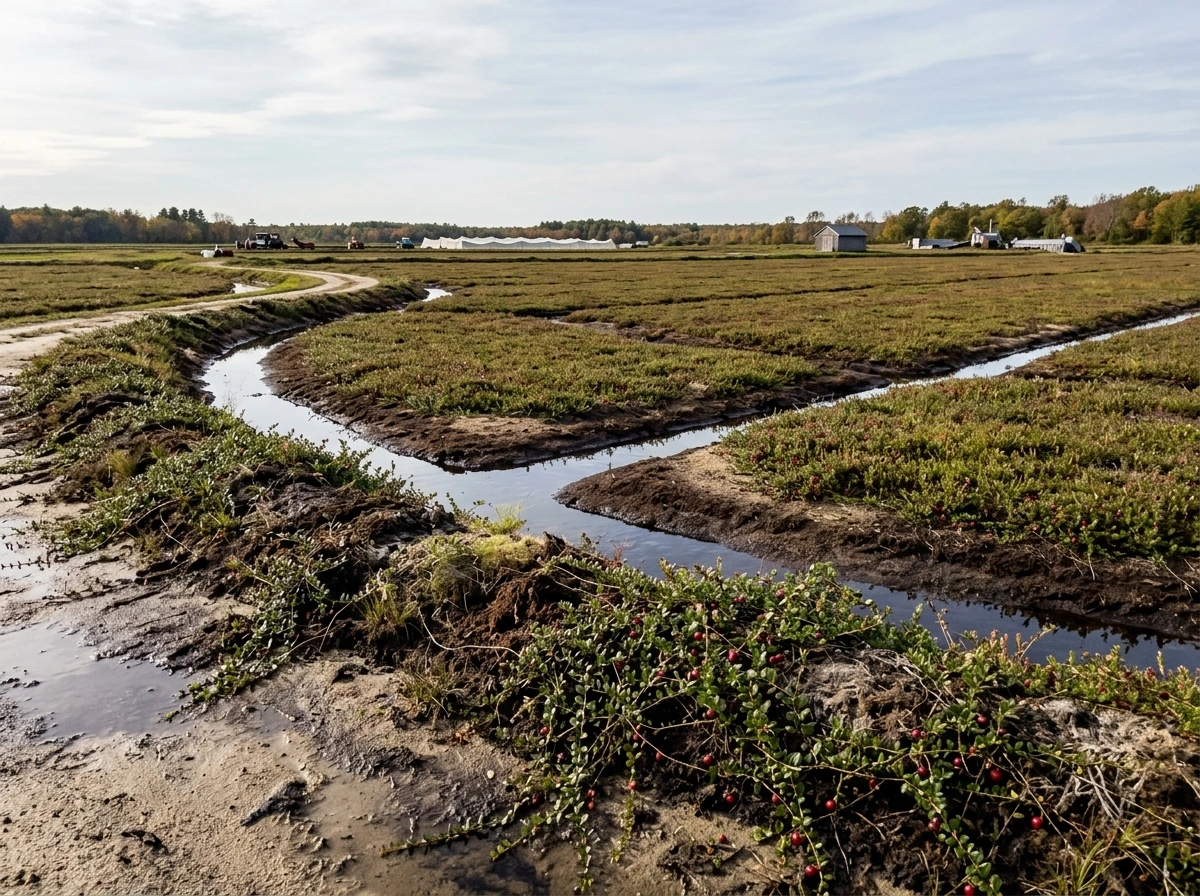
Wild American cranberry (Vaccinium macrocarpon) is native to acidic wetlands, bogs, and sphagnum-dominated peat habitats across the northeastern United States and Canada. In places like Pennsylvania, you'll find it specifically tied to bog hydrology, meaning areas with standing or near-surface water, high organic matter, and very low soil pH. The classic mapped cranberry bog is a layered system: a shallow peat layer over deep sand deposits, with Vaccinium macrocarpon and Sphagnum moss as the dominant plant community.
That said, "bog" doesn't mean "permanently flooded." Natural cranberry habitat has a water table that sits close to the surface during the growing season, typically around 6 to 12 inches below the bed, but the surface itself isn't always underwater. Commercial growers flood their bogs deliberately for frost protection, pest control, and harvest, but the plants spend most of their growing season in moist, not submerged, conditions. That distinction matters a lot when you're planning a home setup.
The cranberry plant: vines, runners, and uprights
Understanding how a cranberry plant is structured saves a lot of confusion. There are two functional parts to know about. First, runners: these are the long, trailing stems that grow along the ground, root at nodes, and spread the plant outward. Second, uprights: short, vertical shoots that emerge from nodes along the runners, and these are the ones that flower and fruit. A healthy cranberry bed looks like a dense, low mat of greenery with berries hanging from those small upright stems.
The plant spreads via creeping rhizomes, not by sending up new canes like a blueberry bush. It's patient and slow in its first couple of seasons, which trips up a lot of first-time growers who expect quick results. Once established (usually by year three), it fills in steadily and starts producing reliable harvests. I've seen beds that look almost dead in year one come back beautifully in year three, so resist the urge to give up early.
Planting cranberries: site, timing, and spacing
Choosing your site
Full sun is non-negotiable. Cranberries need at least 6 to 8 hours of direct sun daily for good fruit production. Beyond that, your site needs to hold moisture without waterlogging the surface for extended periods, and it needs to drain well enough that you have control over the water level rather than being at the mercy of rainfall alone. A low-lying area that stays naturally moist is ideal. Avoid spots with heavy clay that forms a hard crust, and also avoid areas that dry out completely in summer.
Sand is a key ingredient in real cranberry bed construction. New Brunswick's cranberry production guidance specifically points to sand's role in allowing rapid water movement through the upper soil layer while preventing ponding at the bed surface. For a home bed, mixing sand into your planting area helps replicate that drainage dynamic, even without a true bog substrate.
Timing and planting material
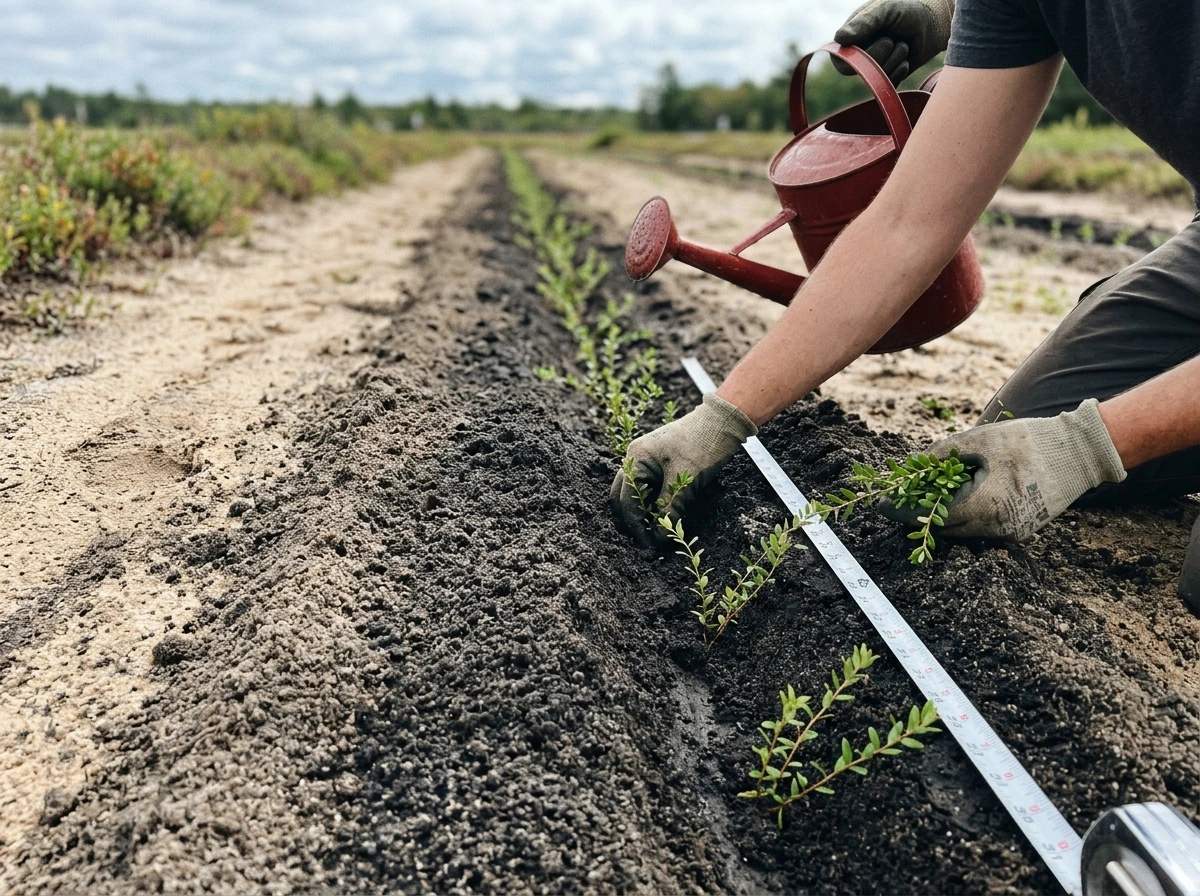
Spring is the standard time to plant, once the ground has thawed and temperatures are consistently above freezing. Unrooted cuttings are the most common planting material and are widely available from specialty nurseries. Rooted cuttings (plugs) and tissue-culture plants also work well and tend to establish faster, though they cost more. If you're starting from cuttings, push them into moistened sand at a depth of about 5 to 10 cm, leaving some foliage above the surface. They root readily in warm, moist conditions.
Spacing and bed depth
Space plants about 12 to 18 inches apart in rows. They will fill in over time via runners, so you don't need to plant wall-to-wall from day one. For bed depth, aim for 8 to 12 inches of prepared growing medium, ideally a mix of peat and sand. After planting, a thin layer of sand spread over the surface helps with weed suppression and reduces disease and insect pressure, which is a practice borrowed directly from commercial operations.
Getting the soil and water right
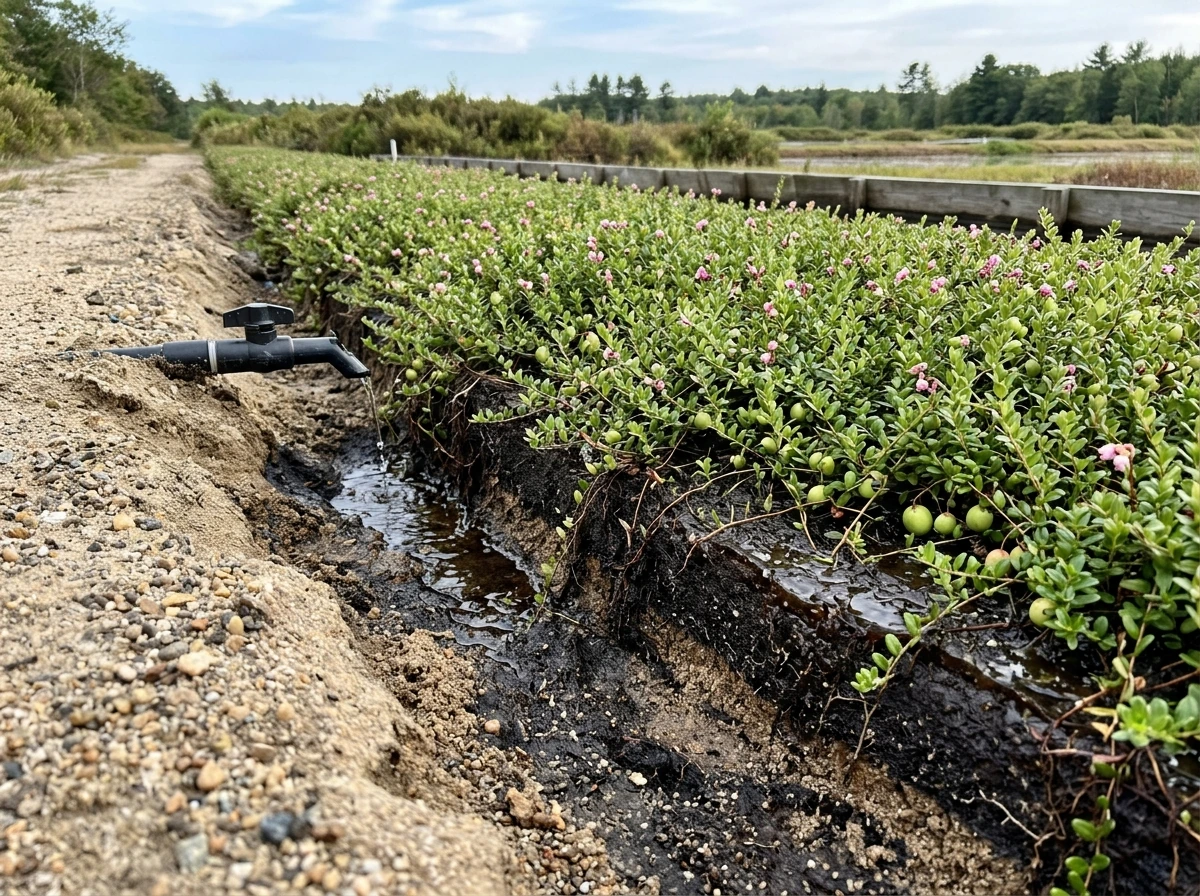
Soil pH is the single biggest factor in cranberry success. Cranberries need a pH between 4.0 and 5.5. Oregon State University Extension's nutrient management guidance puts the target range right in that window. At pH 4.2 to 5.5, nitrogen is available to the plant in the ammonium form it prefers. Above pH 5.5, nutrient availability drops and plant health deteriorates quickly. Before planting, test your soil and amend aggressively if needed. Elemental sulfur lowers pH over time, and peat moss naturally contributes acidity. Don't assume your garden soil is close enough.
Water management is just as critical. During the growing season, the goal is to keep the root zone consistently moist without drowning it. Michigan's cranberry production guidelines describe an ideal water table sitting about 6 to 12 inches below the bed surface during the growing season. In hot or dry weather, cranberries can need the equivalent of 0.20 to 0.25 inches of water per day. Michigan's cranberry production guidelines describe an ideal water table sitting about 6 to 12 inches below the bed surface during the growing season. In hot or dry weather, cranberries can need the equivalent of 0.20 to 0.25 inches of water per day. A drip system or soaker hose makes this manageable at a home scale.
One caution worth taking seriously: too much moisture right after planting actively prevents proper root development. University of Maine Extension specifically warns that excessive wetness in the establishment phase can stop roots from reaching their correct depth and even kill vines outright. Moist is the goal. Saturated is a problem. Give cuttings consistently moist but not waterlogged conditions for the first few months, and let them root before increasing irrigation.
Climate and zone compatibility
Cranberries are hardy in USDA Plant Hardiness Zones 3 through 7. That covers a wide swath of the northern United States, most of Canada, and a comparable range in northern Europe. They need a real winter with sustained cold to break dormancy properly and produce well the following season. In Zones 8 and above, the lack of sufficient winter chill becomes a limiting factor, and consistent summer heat makes moisture management much harder.
If you're in Zone 3 or 4, cranberries are actually a natural fit, winter cold doesn't hurt them once established. If you're in Zone 7, the southern edge of their range, you'll want to pay extra attention to soil temperature in summer and make sure you're not letting beds dry out. If you're in Zone 8 or warmer, cranberries in the ground are a real stretch. Container growing with cooling tricks or a shadecloth-assisted microclimate is a more realistic path, and I'd be honest with yourself about the yield expectations.
In Europe, Vaccinium macrocarpon grows well in Scandinavia, the UK, the Netherlands, and northern Germany, all of which map roughly to the Zone 3 to 7 equivalent climate band. Northern France and Belgium are workable. Southern Europe is generally too warm and dry for reliable production without significant intervention.
Growing cranberries in containers and small spaces
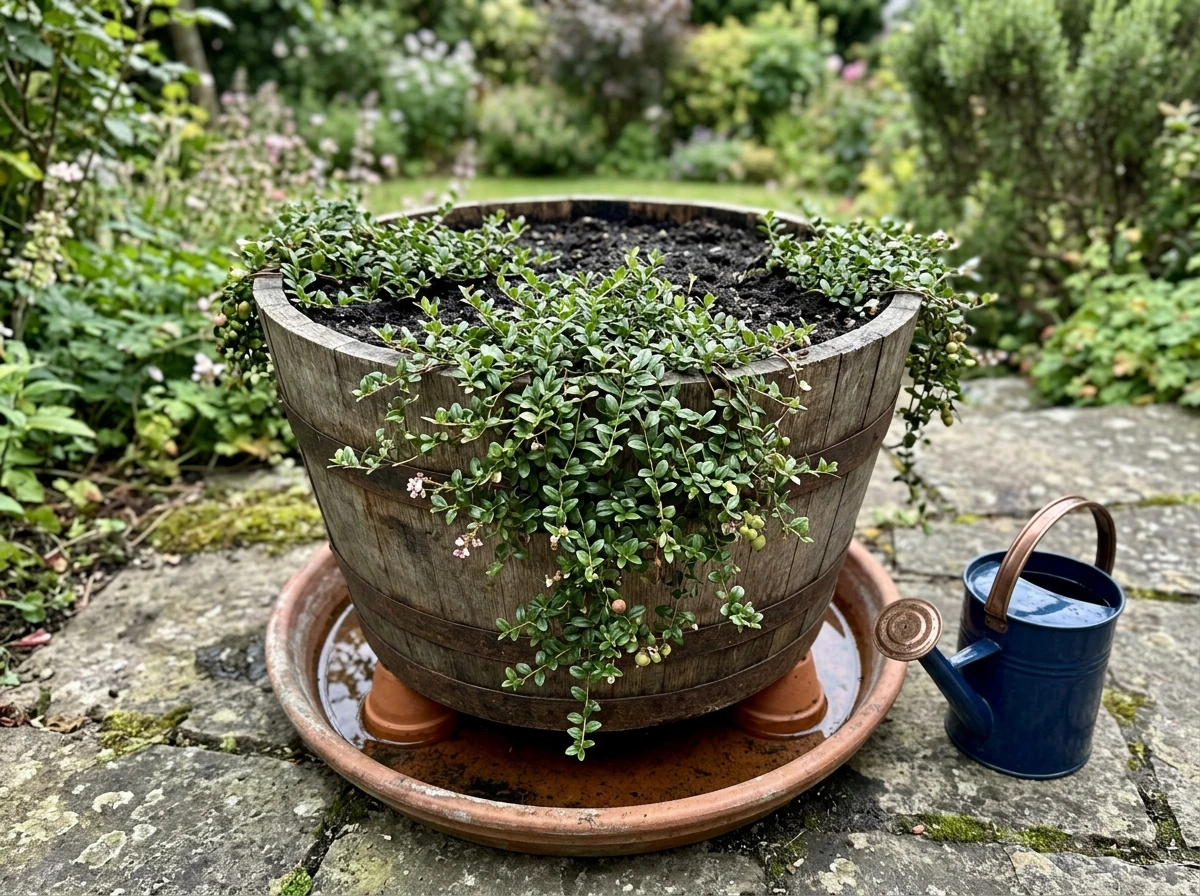
If you don't have the space or site conditions for a ground bed, containers are a genuinely viable option. I've grown cranberries in large half-barrel planters with good results, and they're a popular choice for balcony growers and anyone working with non-acidic garden soil they can't (or don't want to) amend at scale.
The container setup needs to do three things: hold moisture without standing water at the root zone, provide the right acidic substrate, and be large enough for runners to spread. A 16- to 24-inch wide container at least 12 inches deep is a practical minimum. Wider is better, since the plant's spreading habit means it will eventually want room to roam.
For the substrate mix, use roughly two parts peat moss to one part coarse sand. Skip regular potting mix, it's usually too alkaline and breaks down too quickly. The peat provides natural acidity and moisture retention; the sand prevents the mix from becoming anaerobic and compacted. Avoid adding compost or bark, which can push pH up and introduce pathogens.
Watering is the main maintenance challenge in containers. Cranberries want consistent moisture but not a waterlogged root zone, and containers dry out faster than ground beds. In summer, you may need to water daily. A self-watering container with a reservoir can help a lot. Make sure the container has drainage holes, but consider placing a saucer beneath it in hot weather to keep the lower substrate moist. Check pH in your container annually and add a small amount of sulfur or a diluted acidic fertilizer (like one formulated for blueberries) if it starts creeping above 5.5.
Care after planting: fertilizing, pruning, pollinators, and pests
Fertilizing
Wait until your cuttings show clear new growth before applying any fertilizer, this signals that roots have established and the plant can actually use nutrients. University of Maine Extension recommends nitrogen in ammonium form rather than nitrate form, because cranberries absorb ammonium more efficiently at low pH. Urea and ammonium sulfate are commonly used. Go light, cranberries are not heavy feeders, and excess nitrogen produces lush green growth at the expense of fruit. A targeted spring application and a lighter midsummer follow-up is the standard approach. Avoid excess phosphorus, which can cause imbalances in acidic soil systems.
Pruning and sanding
Cranberry beds don't need heavy annual pruning the way blueberry bushes do. Over time, runners accumulate and the bed can get thick with vertical upright growth that becomes less productive. Light pruning or mowing to thin out dense, overgrown mats every few years helps maintain productivity. Spreading a thin layer of sand over the bed after pruning is a commercial practice that works at home too: it buries and controls weeds, encourages new upright growth from buried nodes, and improves pest and disease management.
Pollination
Cranberry flowers are not reliably self-pollinating in practice. Bees and other insects are essential for good fruit set. If you're growing a small container planting on a balcony with limited insect access, fruit set may be disappointing. Plant near other flowering plants to attract pollinators, and avoid spraying any pesticides during bloom, which runs roughly June to July depending on your zone.
Common pests and diseases
- Cranberry fruitworm: larvae that feed inside developing berries; look for premature fruit drop and entry holes on berries
- Sparganothis fruitworm: another fruit feeder; timed insecticide applications or beneficial insects help manage pressure
- Blueberry tip midge: can damage new upright growth; sanding helps reduce overwintering populations
- Cottonball (Monilinia vaccinii-corymbosi): a fungal disease causing berries to turn white and mummify; good air circulation and sanding reduce risk
- Red leaf spot (Exobasidium vaccinii): causes reddish spots on leaves; wet conditions and poor air movement encourage it
- Root rot: usually tied to excessive waterlogging; well-managed drainage is the best prevention
Harvest time and what to expect
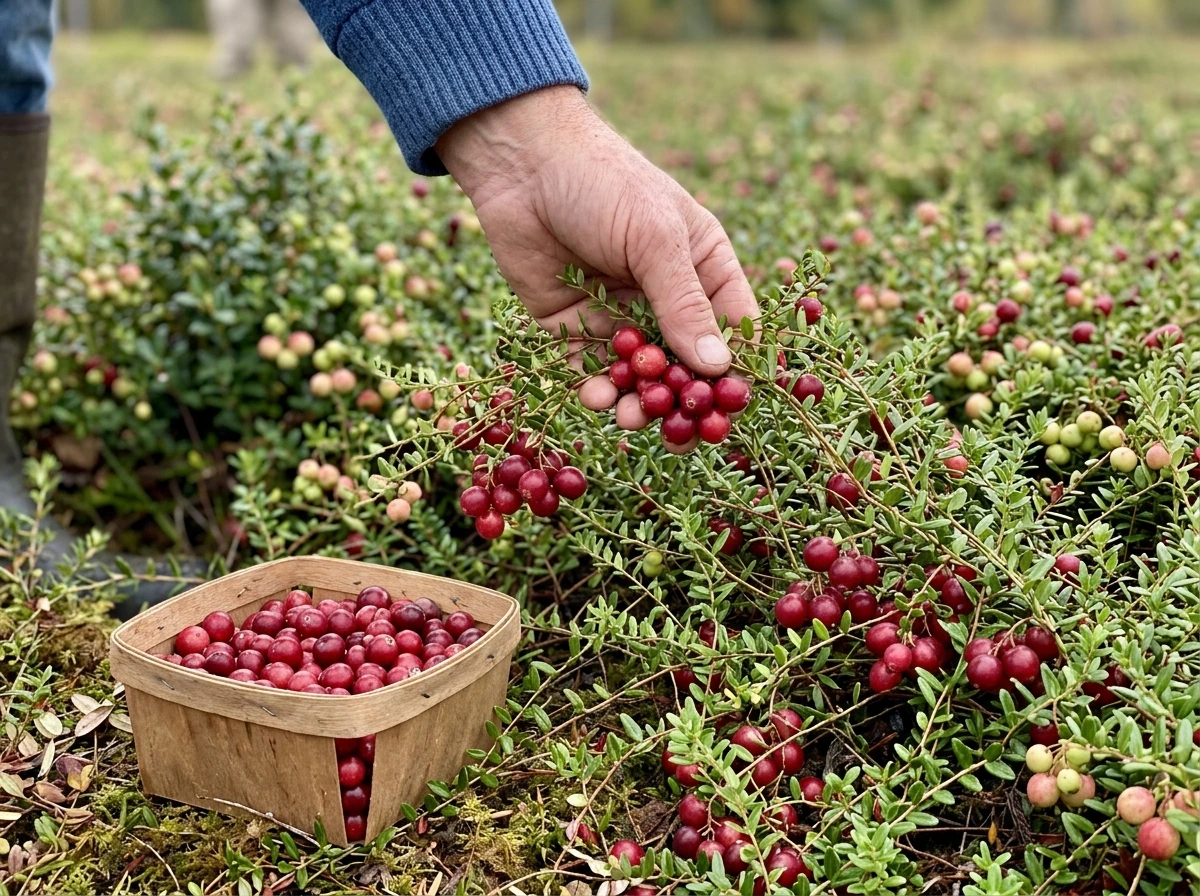
Cranberries ripen from September through November, with the exact timing depending on your zone and the season's weather. Berries are ready to pick when they've turned fully red and give a slight bounce when dropped (yes, that's real, cranberries have air pockets inside and bounce when ripe). At a home scale, you'll hand-pick directly from the uprights. Commercial growers flood their bogs and use water reels to knock the berries loose, where they float to the surface thanks to those same air pockets, but that process doesn't translate to a backyard bed.
Yield expectations matter here. University of Maine Extension gives a realistic home garden benchmark of about 1 pound of cranberries per 5 square feet of established bed, once the planting is at least 3 years old. A 4x8-foot bed in good condition could yield roughly 6 to 7 pounds in a good year. That's a satisfying harvest for fresh use, sauces, and baking, not a commercial operation, but genuinely useful.
For storage, fresh cranberries keep in the refrigerator for about two weeks. For longer storage, freeze them in a single layer on a baking sheet first, then transfer to a bag. Frozen cranberries keep well for up to a year and can go straight from freezer to pot without thawing, which makes them extremely practical for cooking and baking.
Quick comparison: ground bed vs. container growing
| Factor | Ground Bed | Container |
|---|---|---|
| Best for | Zones 3–7 with low-lying or naturally moist sites | Any zone; ideal for gardeners without suitable native soil |
| Soil control | Requires amending large area to pH 4.0–5.5 | Full control; build substrate from scratch with peat and sand |
| Moisture management | Natural water table helps; drip irrigation for dry spells | Requires daily watering in summer; self-watering containers help |
| Spreading room | Unlimited; runners can fill a bed over years | Limited by container width; 16–24 inches minimum recommended |
| Yield potential | Higher long-term (1 lb per 5 sq ft at maturity) | Lower but still productive; smaller harvest per plant |
| Setup effort | Higher upfront (site prep, soil amendment, bed construction) | Lower upfront; easier to get pH right from the start |
| Pollinator access | Usually good outdoors | May need nearby flowering plants to attract enough bees |
If you have a naturally moist, low-lying area and your soil can be brought to the right pH, a ground bed is the better long-term investment. If your soil is heavy clay or alkaline, or you're gardening on a patio or in a warm zone, start with a container. You can always scale up once you understand how the plants behave.
Your next steps based on your setup
- Test your soil pH now. If it's above 5.5, start amending with elemental sulfur or plan a peat-based container setup. Don't skip this step.
- Check your USDA zone. Zones 3 to 7 are your green light. Zone 8 and above, lean toward containers and manage heat carefully.
- Order planting material for spring. Look for rooted cuttings or plugs from a specialty nursery. Unrooted cuttings work too but take longer to establish.
- Set up your water management plan before planting. Drip irrigation or a soaker hose on a timer makes moisture consistency much easier.
- Be patient in year one and two. Resist overwatering new cuttings. Keep them moist but not saturated, and wait for clear new growth before fertilizing.
- Expect your first real harvest in year three. Use the time before that to get your bed established, your pH stable, and your pollinator habitat in place.
FAQ
How can I tell if my cranberry soil pH is actually in the right range (4.0 to 5.5)?
Use a soil test kit or lab test designed for acidic soils, and test after you amend and water (not just right before). Retest again in spring, since sulfur and peat can change pH gradually, and container mixes drift upward faster than ground beds.
Should I fertilize right away after planting cranberries?
Wait until you see clear new growth, that usually means rooting is underway. If you fertilize too early, you can burn tender new roots and encourage lush vines with poor fruiting, keep any early feeding light and use an ammonium-based product rather than nitrate-heavy fertilizers.
What’s the most common watering mistake with cranberries?
Keeping the bed saturated or constantly muddy, especially in the first few months after cuttings go in. Aim for consistently moist, but let the surface avoid staying waterlogged, if you see standing water after irrigation, reduce how often you run water and improve sand/bed drainage.
Can I grow cranberries if my yard gets full sun but the soil dries out quickly?
You can, but you’ll need a moisture-retention strategy that still drains. In practice, adding more peat to a sand-forward mix, using a mulch sand top layer, and using drip or soaker irrigation on a schedule helps prevent drying without turning the bed into a swamp.
Do cranberries need a true bog, can I use a regular garden bed with amendments?
You usually do not need a permanently flooded bog, but you do need a controlled moisture zone and acidic substrate. The “bog-like” part is the combination of pH plus a stable water table or frequent moist irrigation, not literal standing water year-round.
How deep should I build a home cranberry bed, and what happens if it’s too shallow?
A prepared growing medium depth of about 8 to 12 inches is a practical target. If you go much shallower, temperature swings and faster drying can reduce runner survival, and it becomes harder to keep moisture consistent through summer.
What do I do if my cranberry vines look healthy but I get no fruit?
Check pollinator access first, then confirm the plants are old enough and in sufficient sun. Also verify pH is not creeping above 5.5, fruit set and flowering decline when nutrient availability drops, even if the plants look green.
When should I prune or mow cranberries at home?
Plan light thinning every few years rather than annually, because cranberries form uprights from nodes along runners. If you prune too aggressively in the first couple of seasons, you may delay establishment, use a light sand layer after thinning to bury some nodes and suppress weeds.
How do I manage weeds without harming cranberries?
A thin top dressing of sand after planting and after occasional thinning is one of the safest home methods. Avoid aggressive hoeing, since it can cut runners, and try hand-pulling young weeds near uprights instead of using broad, disruptive cultivation.
Are cranberries self-pollinating, and how can I improve fruit set in containers?
In practice, you should not rely on self-pollination alone, insects matter for strong fruit set. For balcony containers, place the pot near other flowering plants and avoid any pesticide sprays during bloom, even “low-tox” products can reduce pollinators.
Can I grow cranberries in Zone 8 or warmer, and what’s the realistic expectation?
It’s difficult in-ground because winter chill and summer heat both limit performance. If you try anyway, container growing is usually more realistic so you can control moisture and microclimate, but expect lower yields and more frequent watering than in cooler zones.
What’s the best way to store cranberries long-term, fresh vs frozen?
Fresh cranberries usually last about two weeks refrigerated, for longer storage freeze them first in a single layer to prevent clumping. Frozen berries can go straight into cooking and baking without thawing, which saves prep time.