
Cranberries grow naturally in cool, wet, acidic habitats across the temperate Northern Hemisphere, specifically in bogs, swamps, and lake margins where the soil is nutrient-poor and strongly acidic. Commercially, the vast majority of cranberries come from a handful of regions in the northern United States and Canada that can closely replicate those wild bog conditions. If you want to grow them yourself, the core question is simple: can you create and maintain a wet, acidic, sandy-peat environment in your climate zone? If yes, you have a real shot. If not, there are workarounds, but they take commitment.
Where Do Cranberries Grow? Habitats, Regions, and How to Grow
Marcus Holloway
24 Mar 2026
Where cranberries grow in the wild
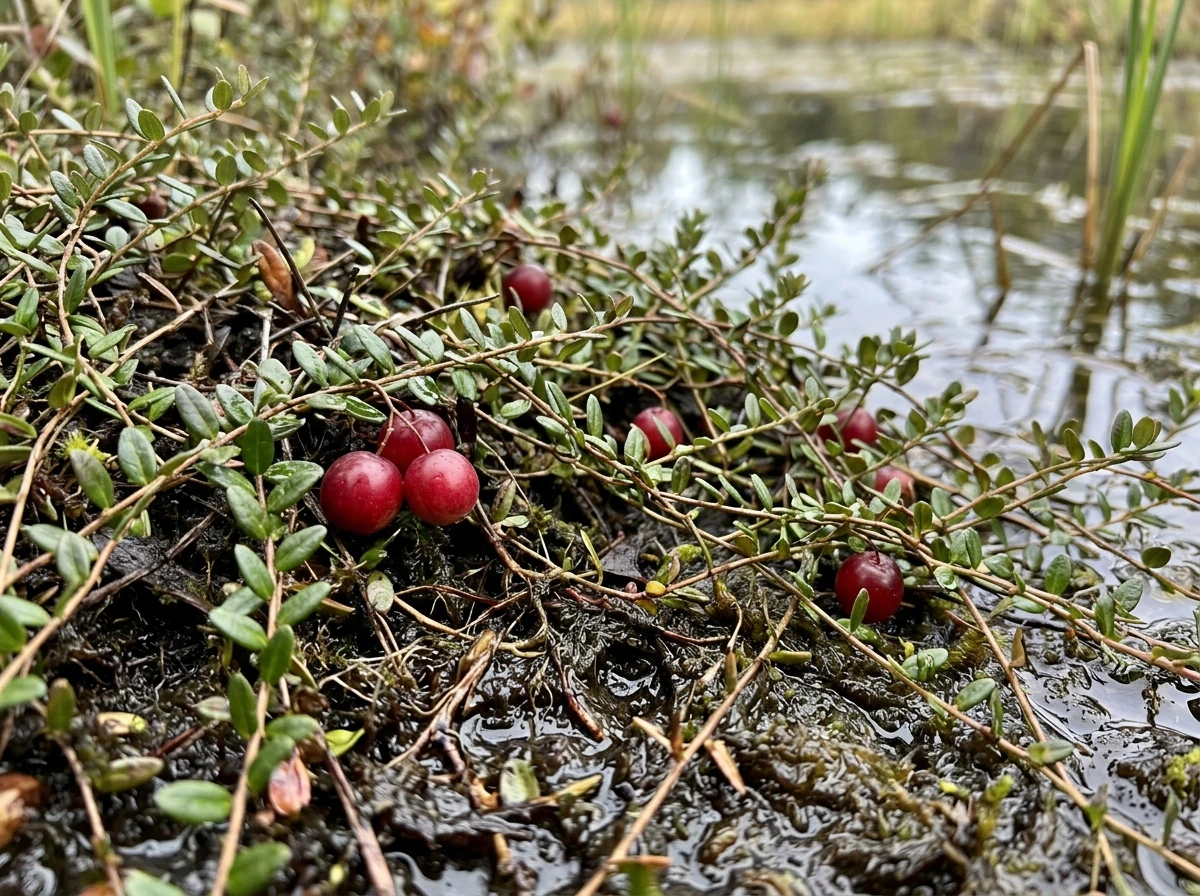
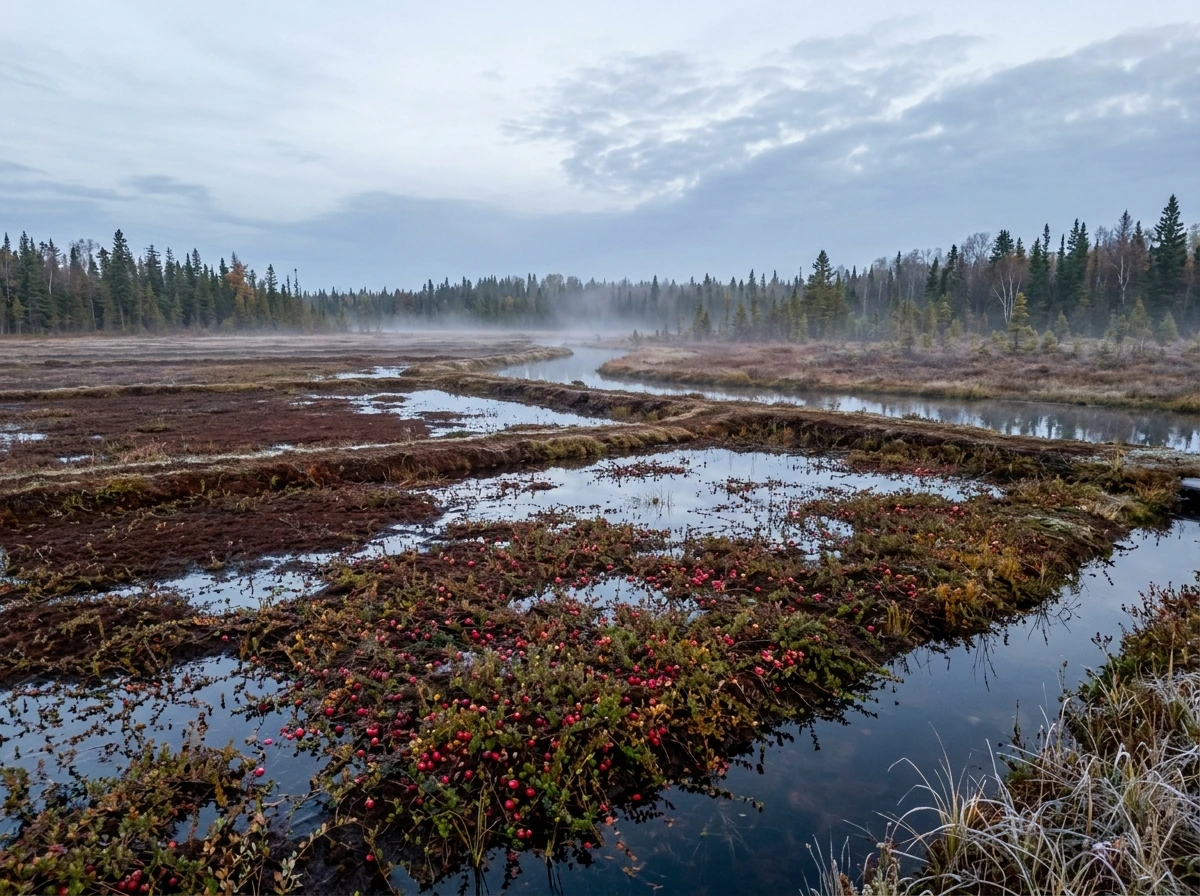
The large cranberry (Vaccinium macrocarpon), the species behind nearly every cranberry you have ever eaten, is native to central and eastern Canada from Ontario east to Newfoundland, and to the northeastern and north-central United States. Its natural range stretches down the Appalachians as far south as North Carolina and Tennessee, and across into the Great Lakes region. The small cranberry (Vaccinium oxycoccos) has an even wider boreal range across the Northern Hemisphere, including northern Europe and Asia, but it is V. macrocarpon that matters most for growers.
In the wild, cranberry is what ecologists call an obligate wetland species. That means it does not just prefer wet soil, it genuinely needs it. You will find wild cranberry growing in sphagnum bogs, acidic swamps, and along the soggy margins of lakes and ponds. A classic example is Barrington Bog in Illinois, a preserved natural site where large cranberry grows exactly as it always has: in a cool, wet, acidic bog surrounded by peat moss. The soil in these places is not rich garden loam. It is nutrient-poor, waterlogged, and has a pH that most other plants would find hostile, typically between 4.0 and 5.5.
Where cranberries are grown around the world
Commercial cranberry production is concentrated in a belt of cool, northern climates with reliable access to water and naturally acidic or manipulable soils. The United States and Canada dominate global output by a wide margin, with Chile, Belarus, and parts of northern Europe (especially Poland and the Baltic states) making up most of the rest. what countries grow cranberries
In the United States, Wisconsin is the undisputed leader. USDA data shows Wisconsin produces around 60 percent of the entire U.S. crop, totaling roughly 5 million barrels annually. Massachusetts is the second-largest state, producing approximately 1.75 million barrels per year, with Oregon and New Jersey also contributing but far behind Wisconsin. If you are curious about which specific states produce the most, that breakdown is covered in more detail in our guide on what states grow cranberries.
In Canada, British Columbia, Quebec, and Ontario are the major production provinces, with British Columbia being the largest Canadian producer. Canada also has significant wild cranberry populations, particularly in the boreal regions of Quebec and the Maritime provinces. For a deeper look at Canadian cranberry geography, check out our article on where cranberries grow in Canada.
| Region | Key Areas | Approximate Role |
|---|---|---|
| United States | Wisconsin, Massachusetts, New Jersey, Oregon, Washington | ~60% of global commercial supply |
| Canada | British Columbia, Quebec, Ontario, New Brunswick | Major producer and wild habitat |
| Chile | Los Lagos, Los Ríos regions | Growing Southern Hemisphere exporter |
| Poland / Baltic States | Northern lowland regions | Significant European production |
| Belarus / Russia | Western peat-bog regions | Smaller commercial + wild harvest |
| Northern Europe (wild) | Scandinavia, Scotland, Northern Germany | V. oxycoccos wild populations |
A rough mental map: if you draw a band between roughly 40° and 55° north latitude, you have captured most of the world's cranberry production. That band covers Wisconsin, Massachusetts, southern Canada, northern Poland, and the Baltic states. Southern Hemisphere production in Chile mirrors that range in reverse. Outside that latitude band and away from cold-winter climates, commercial cranberry growing becomes very difficult.
What cranberries actually need from soil and climate
The word 'best' in cranberry growing comes down to four things: cold winters, cool summers, strongly acidic soil, and reliable access to water. Get all four right and cranberries will thrive. Miss one and you will spend a lot of effort compensating.
Soil acidity and composition
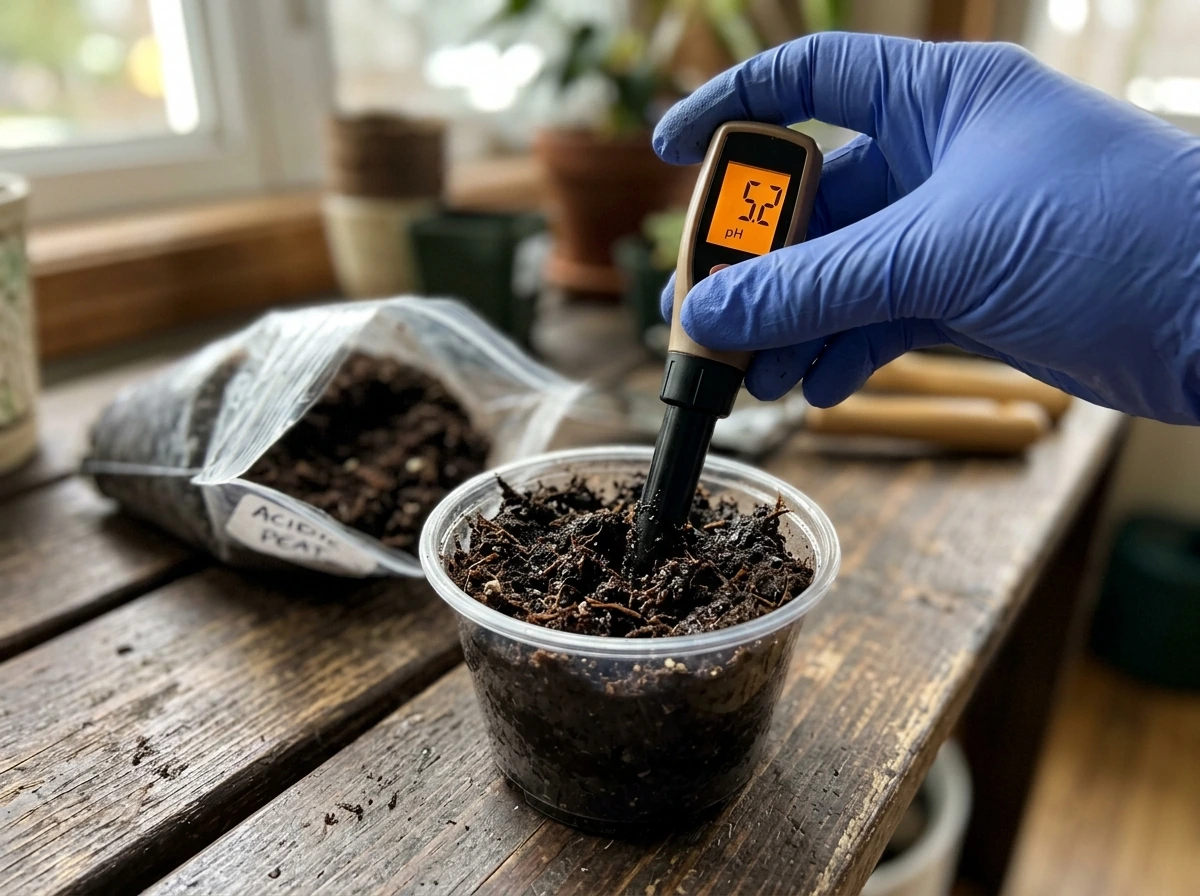
Cranberries are not just acid-tolerant, they genuinely perform best in strongly acidic conditions with a target pH of 4.0 to 5.5. Most garden soils sit between pH 6.0 and 7.0, which is already too alkaline. Commercial cranberry beds are built in layers: sand on top for drainage and rooting, then peat, gravel, and clay beneath to hold moisture and support the water table. The University of Massachusetts describes a typical commercial bed where water moves up from a water table sitting about 18 inches below the soil surface to reach plant roots. Michigan growing standards specify that during the active growing season, the water table should be kept at 6 to 12 inches below the surface. That level of precision matters because cranberry roots are shallow and need consistent moisture without being permanently submerged.
Climate requirements
Cranberries need a genuine cold winter dormancy period (USDA zones 2 through 6 are most compatible) and cool summers. They can handle frost well once dormant, but spring frosts during bud development are a serious threat. Commercial growers in Massachusetts run overhead sprinklers during spring frost events to form a protective ice layer over the vines, which is actually one of the more counterintuitive tricks in all of berry growing. Fall frosts before harvest are equally managed with irrigation. Preventing frost injury is arguably the single most important cultural practice in commercial cranberry production, according to UMass Extension.
How cranberries grow: the plant habit explained
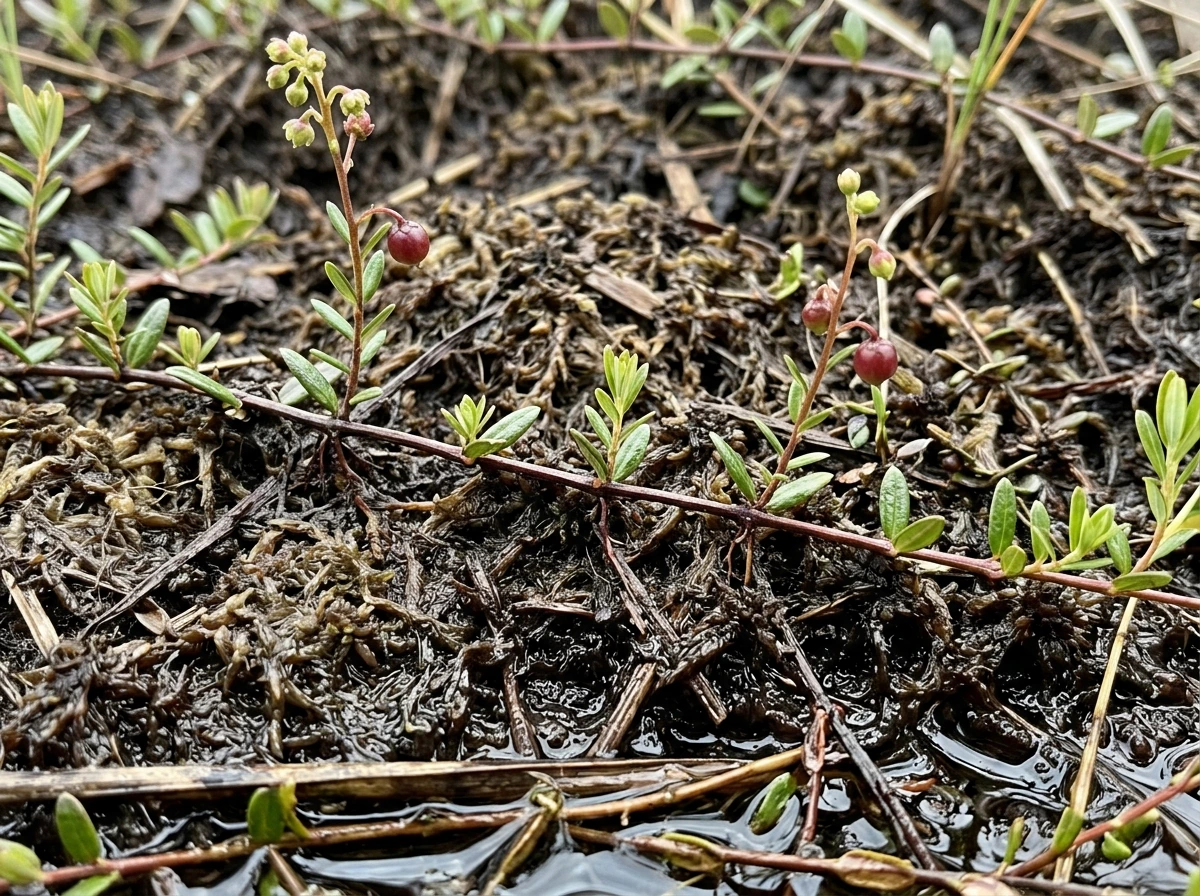
Understanding how cranberries physically grow is key to setting up a home planting that works. They are low creeping vines, not bushes, and definitely not trees. The plant spreads through stolons (runners) that can reach 1 to 2 meters long, rooting into the soil at intervals along their length. From those rooted points, short vertical stems called uprights grow upward, and those uprights are what produce the flowers and fruit. Over time, a well-managed planting forms a dense, interlocking mat.
The commercial 'flooding' image you may have seen, the one where harvested berries float on a surface of water, is a harvest technique, not how they grow day-to-day. The berries float because they contain air pockets. Growers flood the beds for harvest, then for winter protection, then manage the water level carefully through the rest of the year. Day-to-day growing happens on a moist, acidic sandy-peat bed, not under standing water.
Commercial growers in New Brunswick describe building beds on peat bogs or organic soils with a sand layer added to ensure rapid water movement at the surface and prevent ponding, which can cause root issues. The entire system, beds, ditches, flumes, ponds, and wetland buffers, works together as an engineered wetland. At home, you are essentially trying to replicate a small version of that system.
The cranberry growing season from start to harvest
Cranberry production runs on roughly a 16-month cycle, which surprises most home growers who expect annual results. Here is how the year breaks down in a typical northern production region like Massachusetts:
- Late winter to early spring: Winter flood is withdrawn around late March. Growers may hold a 'late water' flood through April for an additional few weeks to protect buds, then drain before bud break.
- April to June: Vegetative bud development on the uprights. Frost protection via overhead irrigation is critical during this window.
- Late June to mid-July: Bloom period. Bees pollinate the small pink flowers, and tiny fruit forms at pollination.
- July to September: Fruit development and sizing. Berries remain green through most of summer.
- September: Berries begin turning red as temperatures drop.
- Mid-September through October: Harvest window, peaking in mid-October. Fresh berries are available September through November.
- November onward: Winter flood applied for frost and rodent protection. Vines go dormant.
The 16-month cycle means that the bud that produces next year's fruit is actually set during the current growing season. This is why frost damage in spring is so devastating: you lose not just this year's flower but the structure for the following year's crop. It also means new plantings will not produce meaningful fruit until their second or third year.
Can you grow cranberries where you live?
The honest answer depends heavily on your climate zone and your willingness to engineer your soil. Here is a straightforward breakdown by region:
Best candidates (zones 2 to 6, cool and cold climates)
If you are in the northern United States (New England, Great Lakes, Pacific Northwest above zone 7), Canada, northern Europe, or similar cold-winter climates, you are in the sweet spot. You have the cold winters cranberries need for dormancy, cool summers that keep stress low during fruit development, and you are most likely to have naturally acidic soils or at least the ability to create them without extreme intervention. This is where growing cranberries at home is genuinely realistic.
Possible with extra effort (zones 7 to 8)
In transitional climates like the mid-Atlantic states, southern Pacific Northwest, or parts of central Europe, cranberries can be grown but will need extra attention. Summers are warmer than ideal, and winters may not be cold enough to trigger proper dormancy every year. You will need to focus on soil acidification, consistent moisture management, and choosing a shaded or cooler microsite in your garden to compensate for heat.
Very difficult (zones 9 and above)
In warm or subtropical climates, cranberries are a real stretch. The combination of warm winters (no dormancy cue), hot summers (fruit stress), and alkaline or dry soils stacks the odds heavily against you. It is not impossible in a highly controlled environment, but you would be fighting the plant's basic biology at every turn. In those climates, blueberries are a far more practical acidic-soil crop to pursue instead.
Growing cranberries in containers and small spaces
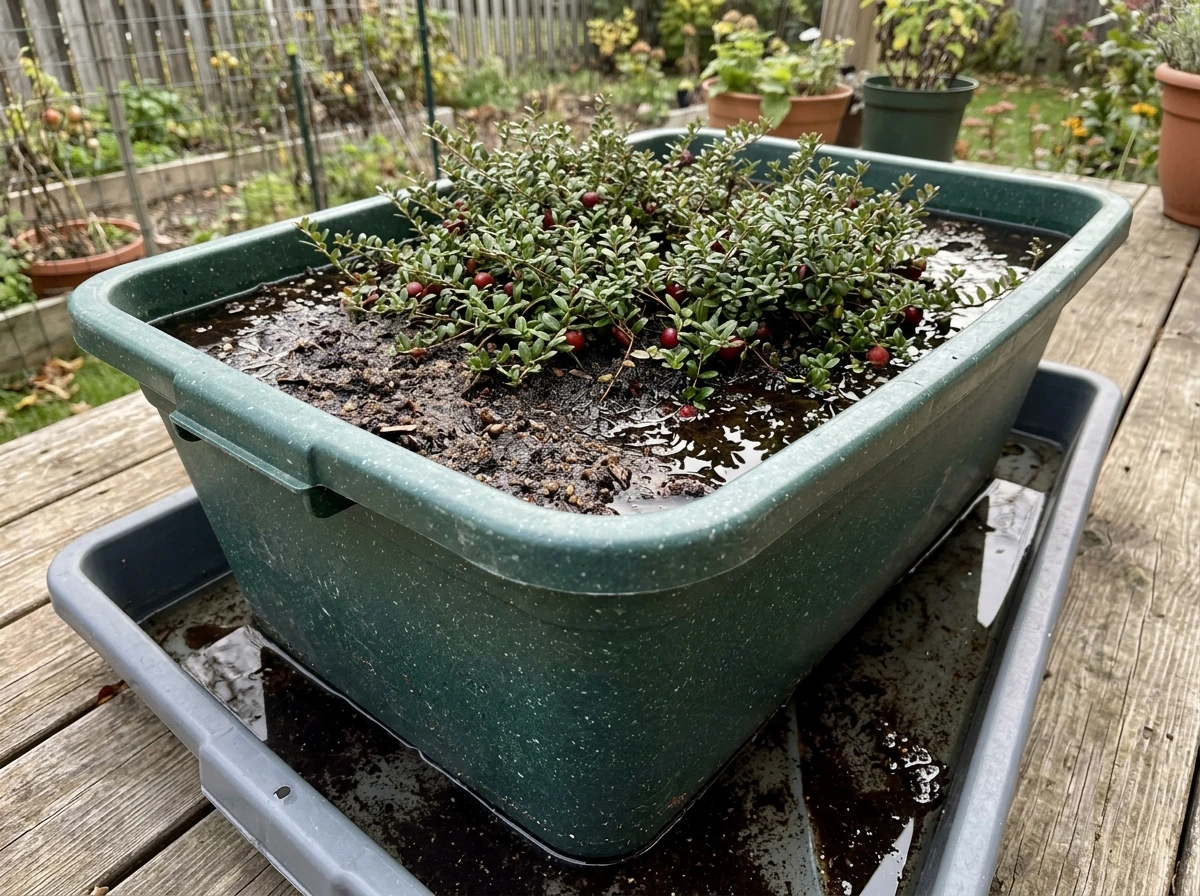
Container growing is genuinely possible for cranberries, and it is one of the better options for home gardeners who do not have the space or water access to build a full bog bed. The key is mimicking bog conditions in miniature, and the main risks are drying out too quickly and pH drift over time.
The most practical small-scale approach is building a mini cranberry bog rather than a standard container planting. Here is how to do it:
- Choose a large, shallow container (a half whiskey barrel or a wide plastic tub at least 18 inches deep works well). Line it to hold moisture but include a drainage hole you can plug and unplug to control water level.
- Fill the bottom 2 to 3 inches with gravel for the drainage layer.
- Add a 4-inch layer of coarse sand mixed with peat moss (roughly 50/50 by volume) on top.
- Top with 2 to 3 inches of pure peat moss or sphagnum moss as the planting layer.
- Test and adjust pH to 4.5 to 5.0 before planting using sulfur amendments or acidic fertilizers.
- Plant rooted cranberry cuttings or young plants 12 inches apart and press runners gently into the surface.
- Keep the container consistently moist, not waterlogged but never drying out. In warm weather, check moisture daily.
- Apply a diluted acid fertilizer (formulated for blueberries or azaleas) monthly during the growing season.
- In cold climates, sink the container into the ground or mulch it heavily in winter to protect roots from freeze-thaw damage.
The runner and mat habit of cranberries actually suits containers well once established. Those stolons will root into the media as they creep across the surface, building a denser planting each season. The critical watch-out: runners need consistently wet, acidic media to root successfully and generate the uprights that produce fruit. If your container dries out or the pH climbs, new fruiting structures will not form and production drops fast.
For growers in zones 5 to 6 with limited yard space, a container bog on a deck or patio is a genuinely satisfying project. Do not expect the yields of a commercial bog, but a well-managed 3-foot-wide container planting can produce enough berries for a Thanksgiving sauce by year three or four, which is honestly pretty rewarding for a patio garden.
Your next steps as a grower
Start by figuring out your USDA zone and your existing soil pH. If you are in zones 2 to 6, you are a good candidate. Test your soil: if it is already below pH 5.5, you have a head start. If not, plan for a significant amendment process before planting, because trying to acidify soil after cranberries are in the ground is frustrating.
Next, decide between an in-ground bog bed and a container setup based on space and water access. An in-ground bed lined with polyethylene (leaving drainage at one end you can control) gives you the best long-term results. A container setup is more forgiving to start and easier to manage pH in.
Source rooted cuttings or plugs from a reputable nursery that specializes in native or fruiting plants. Varieties like 'Stevens', 'Ben Lear', and 'Pilgrim' are reliable performers for home growers in northern climates. Plant in early spring once soil temperatures have risen above freezing, get your irrigation system sorted before the first frost event in spring, and accept that year one is mostly about establishment. Year two you will see the vines fill in. Year three is when things start to get genuinely exciting.
FAQ
Why can’t I grow cranberries just by planting them in a wet spot near my yard, even if winters are cold?
Most people look at the temperature, but cranberries also need a consistent water table and an acidic root zone (often sandy-peat or engineered media). If your site is wet but the soil pH is near neutral, the plants usually fail even if winter cold is sufficient. A practical check is to measure soil pH and plan for long-term moisture control, not just seasonal precipitation.
What’s the most common mistake home growers make regarding pH after establishing a cranberry bed?
After planting, the most common reason home beds fail is pH drift upward over time as rainwater and amendments dilute the acidity or as compost and garden soil creep in. Use a dedicated acidified medium, avoid adding lime or organic compost into the bed, and re-test pH periodically to catch drift before flowering structures form.
If my plant survives winter, will spring frost only affect this year’s berries?
Yes, but timing matters. Spring frosts can damage buds because the plant’s fruiting structure for the next crop is already set as part of a multi-stage cycle. In practice, you want irrigation and frost protection planned before buds break, and you should assume that one severe frost year can reduce yield for more than one season.
Do cranberries need to be kept flooded all summer like the harvest photos suggest?
Cranberry beds do not stay underwater during normal growth. Standing water for long periods can reduce root oxygen and promote problems, so aim for “wet but managed.” In most setups, you keep the surface moist and the water table at a controlled depth, then use flooding only for harvest and specific protection windows.
My soil is acidic for other plants, can I skip building cranberry-style media?
It’s feasible, but do not assume “acid-loving” means “cranberry-ready.” Many regions have acidic soils, yet they are often too nutrient-rich or drain incorrectly. Cranberries prefer strongly acidic conditions (roughly pH 4.0 to 5.5) plus an engineered texture that holds moisture while still allowing the right capillary movement.
How long should I expect it to take before my cranberry plants produce enough berries to notice a harvest?
You can start with plugs or rooted cuttings, but yield depends on establishment. Expect limited fruit in year one, better vine coverage in year two, and meaningful harvest in year three or later. If you buy bare-root plants, confirm they are the right cranberry species for your climate, and plan for at least a full growing season to build a dense mat.
What’s the right way to weed a home cranberry bed without damaging the vines?
Runners are shallow and spread horizontally, so weed control and foot traffic matter. Avoid deep cultivation that cuts stolons, and use careful hand weeding once the mat is established. Mulch can also interfere if it raises pH or blocks water movement, so keep the bed surface consistent with your acidic sandy-peat approach.
Can I use a regular berry fertilizer on cranberries to boost yield?
Over-fertilizing is a frequent issue because cranberries are adapted to nutrient-poor conditions. If you use standard lawn or garden fertilizers, you can drive excess growth of vines at the expense of fruiting, or increase soil salts that stress roots. If you fertilize at all, keep it minimal and targeted, and prioritize moisture and pH stability.
In a transitional climate, what planting site choices make the biggest difference?
Choose a microsite first. In marginal climates, a shaded or cooler spot, plus wind protection and reliable irrigation, can lower summer stress and reduce the risk of insufficient dormancy. Also, position beds to collect and hold acidified water rather than letting it drain away too quickly.
What changes most for cranberries when you grow them in a container instead of a bog bed?
Container bogs work best when you can maintain wetness and prevent pH drift. Use a large enough container so it does not dry out between irrigations, and put it where you can control water movement. Plan a routine to check soil moisture and pH regularly, because containers swing faster than in-ground beds.